

Key Takeaways
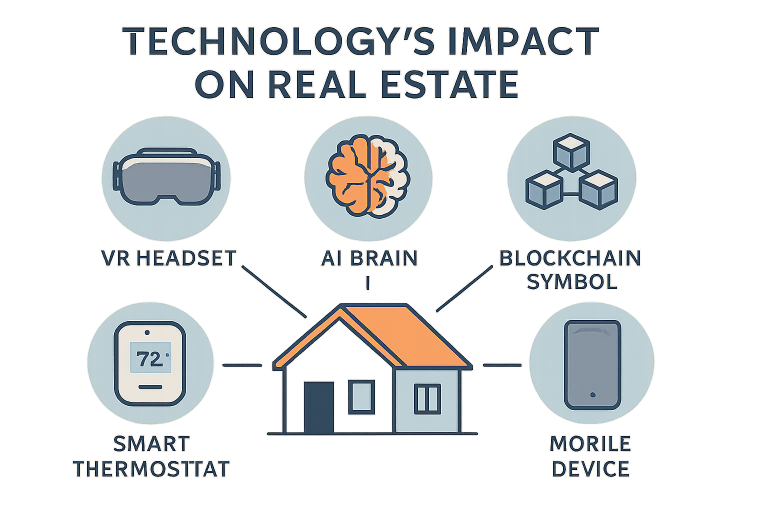
- Virtual and augmented reality offer immersive property tours, saving time and broadening market reach.
- Artificial intelligence and big data provide accurate property valuations and market predictions.
- Blockchain technology ensures secure, transparent, and efficient real estate transactions.
- Smart home devices and IoT integration enhance property appeal and energy efficiency.
- Digital platforms streamline property management, improving tenant satisfaction and operational efficiency.
Table of Contents
- Introduction
- Virtual Tours and Augmented Reality
- Artificial Intelligence and Big Data
- Blockchain and Smart Contracts
- Smart Home Technology and IoT
- Digital Platforms for Property Management
- Additional Technologies Impacting Real Estate
- Future Trends in Real Estate Technology
- Conclusion
Technology is revolutionizing the real estate industry, introducing tools and platforms that enhance efficiency, transparency, and client satisfaction. From virtual tours to blockchain transactions, these innovations are reshaping how properties are bought, sold, and managed. For those seeking expert guidance in this evolving landscape, Naples FL real estate experts The Profeta Team at The Native Group Naples offer unparalleled service. With a deep understanding of the Naples market and a commitment to leveraging the latest technological advancements, they help clients navigate the modern real estate landscape.
Virtual Tours and Augmented Reality
Virtual and augmented reality technologies have transformed property viewings. Prospective buyers can now explore homes remotely through immersive 3D tours, gaining a realistic sense of space and layout without physical visits. This advancement not only saves time but also expands the reach of property listings to a global audience. For instance, platforms like Matterport and Zillow 3D Home enable detailed virtual tours, enhancing the home-buying experience.
Augmented reality goes a step further by allowing potential buyers to visualize changes to a property before making a purchase. Using a tablet or smartphone, they can virtually “stage” a home, experimenting with different paint colors, furniture arrangements, and even renovations to see how modifications would impact the space. This interactive approach leads to more informed decisions and a faster sales cycle.
Artificial Intelligence and Big Data
Artificial intelligence (AI) and big data analytics are revolutionizing property valuation and market analysis. By processing vast amounts of data, AI algorithms can provide accurate property value estimates and predict market trends with unprecedented precision. Companies like Redfin utilize AI to power their valuation tools, offering instant estimates based on numerous data points. This technological integration helps buyers, sellers, and investors make informed decisions.
AI-driven chatbots and virtual assistants are also becoming standard in real estate. They can handle initial client inquiries, recommend suitable listings, schedule appointments, and answer common questions 24/7. This not only improves customer service but also frees up valuable time for human agents to focus on more complex tasks and negotiations.
Blockchain and Smart Contracts
Blockchain technology introduces a new level of security and transparency to real estate transactions. By creating tamper-proof digital ledgers, blockchain ensures that property records are secure and verifiable. Smart contracts automate processes such as payments and title transfers, reducing the need for intermediaries and minimizing the risk of fraud. This innovation streamlines transactions, making them faster and more reliable.
Another advantage of blockchain is its ability to enable fractional property ownership. Through tokenization, investors can purchase shares of real estate, opening the market to a broader demographic and increasing liquidity in an asset class that has traditionally been illiquid. This democratization enables more people to participate in real estate investment opportunities.
Smart Home Technology and IoT
The integration of smart home devices and the Internet of Things (IoT) enhances property appeal and functionality. Features such as smart thermostats, security systems, and lighting allow homeowners to control their environment remotely, enhancing convenience and energy efficiency. Properties equipped with these technologies are increasingly attractive to buyers seeking modern, connected homes.
Furthermore, IoT-based systems can monitor the status of household devices, detect maintenance issues early, and even optimize energy use based on occupancy patterns. This proactive approach not only saves homeowners money but can also lead to higher resale values as buyers increasingly prioritize sustainability and connected living environments.
Digital Platforms for Property Management
Property management has become more efficient with the advent of digital platforms. These tools enable landlords and property managers to handle rent collection, maintenance requests, and tenant communications seamlessly. By automating routine tasks, these platforms improve operational efficiency and tenant satisfaction, leading to better property management outcomes.
Cloud-based portals also provide data analytics for property managers, offering insights on tenant turnover rates, maintenance response times, rent payment histories, and more. This data-driven approach supports better decision-making and creates opportunities to optimize building performance and enhance tenant retention through more responsive service.
Additional Technologies Impacting Real Estate
Drones and aerial photography have become invaluable tools for showcasing properties, particularly large estates or commercial listings. High-resolution aerial footage offers unique perspectives on a property’s surroundings and can highlight key features, such as landscaping, pools, and proximity to amenities. This visual storytelling supports more engaging marketing campaigns and helps properties stand out in a competitive marketplace.
Mobile applications are another growing trend. From searching and filtering listings to submitting rental applications and signing leases electronically, these apps streamline every step of the real estate process for agents and clients alike. Real-time notifications keep everyone updated, reducing delays and improving the overall experience.
Future Trends in Real Estate Technology
Looking ahead, sustainability-driven technologies are poised to play an even larger role. Innovations like solar panels, energy management systems, and green building materials are becoming more mainstream. Additionally, the growing popularity of virtual real estate and the metaverse may soon present opportunities for brokers and developers to explore digital property transactions in immersive online environments.
Another anticipated trend is the rise of predictive analytics, which leverages historical data and machine learning to forecast market shifts, rental demand, and price fluctuations. Agents and investors using these tools will be better equipped to anticipate changes and react proactively, maximizing returns and minimizing risk.
Conclusion
The real estate industry is undergoing a significant transformation driven by technological advancements. Embracing these innovations not only enhances operational efficiency but also improves client experiences. As technology continues to evolve, staying informed and adaptable will be key for professionals aiming to thrive in this dynamic landscape. For personalized assistance in navigating these changes, consider reaching out to Naples, FL, real estate experts The Profeta Team at The Native Group Naples. Their expertise and commitment to leveraging technology can help you achieve your real estate goals in the Naples area.